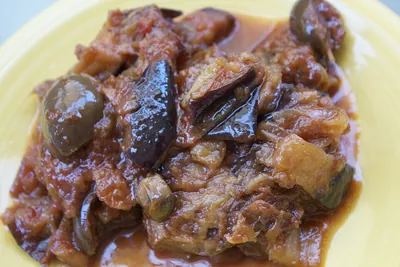
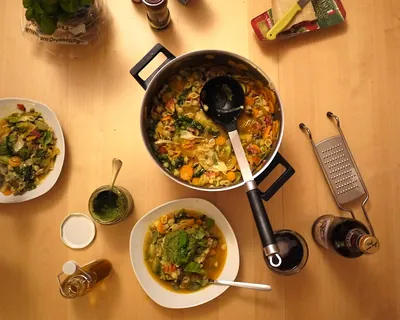
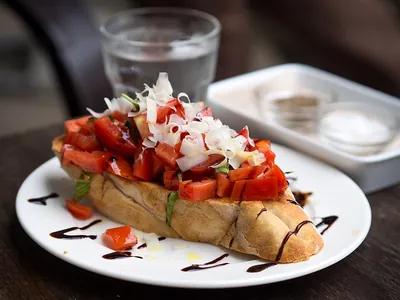
Photo: Massimoweb · CC BY-SA 3.0 · Photo source. The photograph shows caponata without the measured bread; exact vegetables, vinegar, nuts and quantities are unverified.
Ingredients for 2 portions
500 g Aubergine
100 g Onion
60 g Celery stalks
250 g Tomato
100 g Pitted olives
25 g Capers, drained
15 g Pine nuts
30 g Olive oil
35 g Wine vinegar
10 g Sugar
15 g Fresh basil
200 g White wheat bread
50 g Water
3 g Salt
1 g Black pepper
Method
Cut 500 g aubergine into 1 cm cubes, dice 100 g onion and 60 g celery, chop 250 g tomato, halve 100 g pitted olives, drain 25 g capers and tear 15 g basil. Toast 15 g pine nuts in a dry pan for 1–2 minutes and set aside.
Heat 30 g olive oil in a broad pan over medium-high heat. Cook aubergine, onion and celery with 2 g salt for about 9–10 minutes, stirring until the aubergine browns and softens. Add the tomatoes, olives, capers, 50 g water and 10 g sugar; simmer 7–8 minutes until the sauce clings to the vegetables.
Stir in 35 g wine vinegar and 1 g pepper; cook another 1–2 minutes. Fold in the basil and toasted pine nuts. Toast 200 g white wheat bread, then divide the caponata and bread into two substantial portions. Serve warm, or cool promptly if saving for later.
Adapted from Elena Silcock’s 25-minute caponata stew, with celery, olives, pine nuts and sweet-sour vinegar in the Sicilian style described by La Cucina Italiana (https://www.lacucinaitaliana.com/italian-food/italian-dishes/sicilian-caponata-recipe). Fast pan-browning replaces salting, batch-frying and long cooling, so this is a weekday adaptation rather than the long traditional method. The photographed caponata does not show the measured bread. Choose bread and wine vinegar labelled for vegan eating; wine vinegar may contain sulphites. The 30-minute window assumes 1 cm cubes and a broad hot pan; larger pieces take longer. Calories are ingredient-based estimates.
Caponata siciliana
Allergens and ingredient checks
Listed allergens: celery, gluten, sulphites. Check actual packaging and cross-contact information. Nutrition is estimated from ingredient weights; recipe suitability depends on the specified products.